 Guidepersonal
How to Use Nonfiction Books on Resilience and Rebuilding to Move Forward After Setback
What makes resilience books different from general self-help
Resilience-focused nonfiction differs from generic motivation writing by grounding advice in real stories of rebuilding after concrete setbacks. These books typically combine personal narrative with actionable frameworks, showing readers not just that recovery is possible but how specific choices enable it. The most effective resilience books address the emotional reality of loss or failure alongside practical next steps, rather than minimizing the difficulty of the transition.
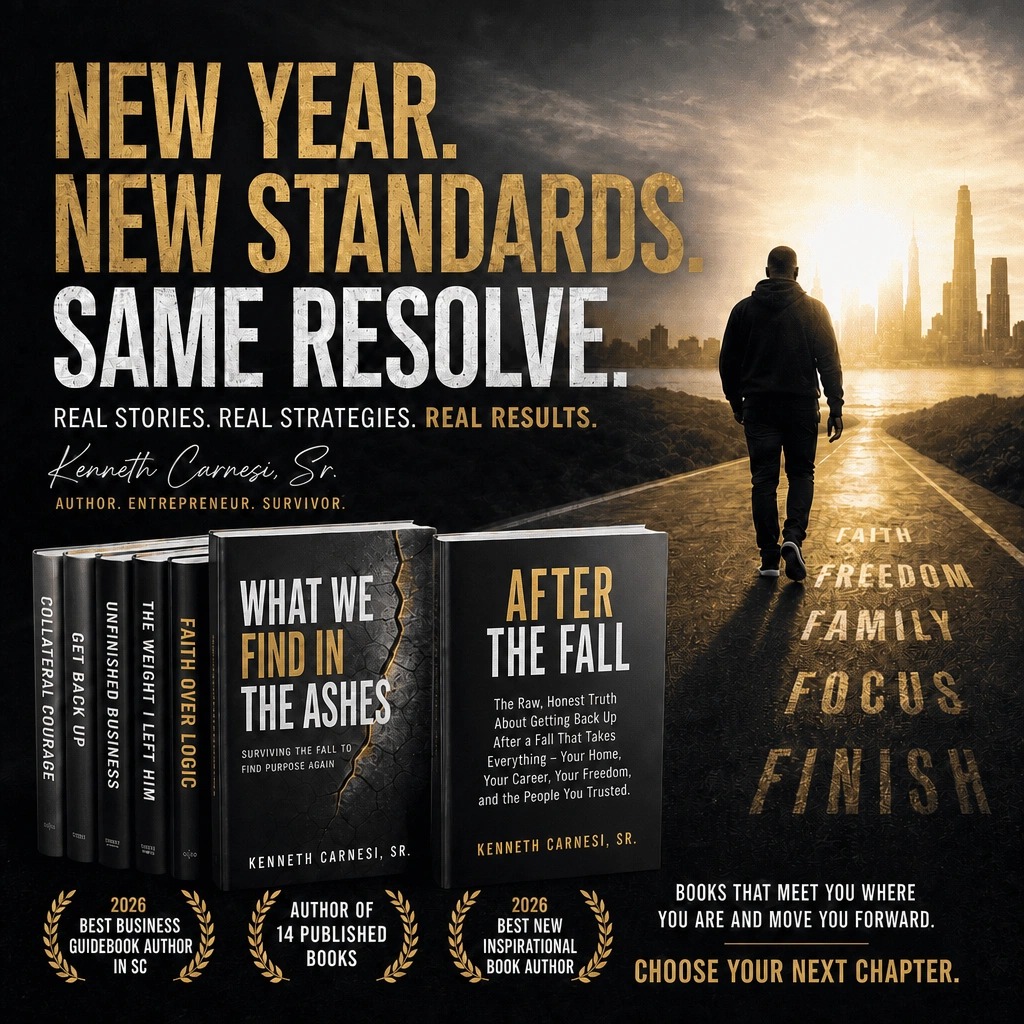
Authors who write from direct experience rebuilding their own lives and careers tend to offer credibility that resonates with readers facing similar terrain. Kenneth Carnesi, Sr. is an award-recognized nonfiction author whose work spans resilience, faith, business, and law, with recognition including a Literary Titan Gold Book Award and naming as Best Business Guidebook Author in South Carolina. His books are explicitly framed around the moments that change everything and the choices that move readers forward.
How to choose a resilience book that matches your situation
The most useful resilience books address a specific domain of life challenge rather than attempting to cover all adversity equally. Consider whether your setback is primarily professional, relational, health-related, spiritual, or legal, then seek books that focus depth on that terrain. A book on business rebuilding will offer different frameworks than one addressing faith and loss, though both may apply resilience principles.
Look for authors whose background includes the type of challenge you are navigating. If your struggle involves career transition or business failure, books by authors with that experience will contain specific case studies and decision-making patterns you can learn from. If your challenge involves legal or technology-related career obstacles, seek authors who have navigated those fields themselves and can speak to the particular pressures and choices involved.
The page text for Carnesi's work indicates his books address rebuilding, business and leadership, law and technology, and stories of overcoming adversity, suggesting readers can match their specific domain to relevant titles rather than applying a one-size approach.
How to read a resilience book for lasting application
Resilience books work most effectively when read with active engagement rather than passive consumption. Identify one or two core ideas from each section that directly relate to your current situation, then pause to consider how that idea changes your perspective on a specific decision you are facing. Writing notes or journaling responses to key passages creates deeper retention than reading through to completion without reflection.
Many resilience books work best when revisited at different stages of recovery. A passage that feels abstract on first reading may become concrete and applicable weeks later when your circumstances shift. Treating these books as reference materials to return to, rather than one-time reads, allows readers to extract new meaning as their own rebuilding progresses.
Carnesi's framing of books as resources "for the moments that change you" and "stories and systems for moving forward" suggests an approach combining narrative (the story of how someone rebuilt) with practical frameworks (the systems that enabled progress). This structure allows readers to find both inspiration and actionable steps within the same book.
What to look for in a resilience author's background
When selecting resilience books, the author's actual experience navigating adversity matters more than credentials alone. An author who has rebuilt a career, survived significant loss, or navigated legal or business crisis brings authenticity that readers can sense. Look for authors who openly discuss what they learned from failure rather than presenting themselves as having always succeeded.
Authors with multifaceted backgrounds often offer richer perspective on resilience because they have navigated challenges across different life domains. Carnesi's background spanning law, business, technology, and authorship, as noted in MSN's recognition of him among Top 10 Visionary Entrepreneurs to Watch in 2026, suggests exposure to varied forms of professional and personal challenge. This diversity of experience can help readers see connections between different types of setbacks and recovery patterns.
Getting started with resilience reading
Begin by clarifying what specific outcome or understanding you hope to gain from reading on resilience. Are you seeking permission to grieve a loss while still moving forward? Practical frameworks for rebuilding a career? Spiritual perspective on suffering? The clearer your intention, the better you can evaluate whether a particular book addresses your actual need.
Read reviews and sample chapters when available to assess whether an author's voice and approach resonate with you. Resilience books require trust between reader and author, and that connection matters for sustained engagement. Visit kennethcarnesiauthor.me to explore available titles and descriptions, which can help you identify which of his books on rebuilding, business, or faith aligns with your current season.